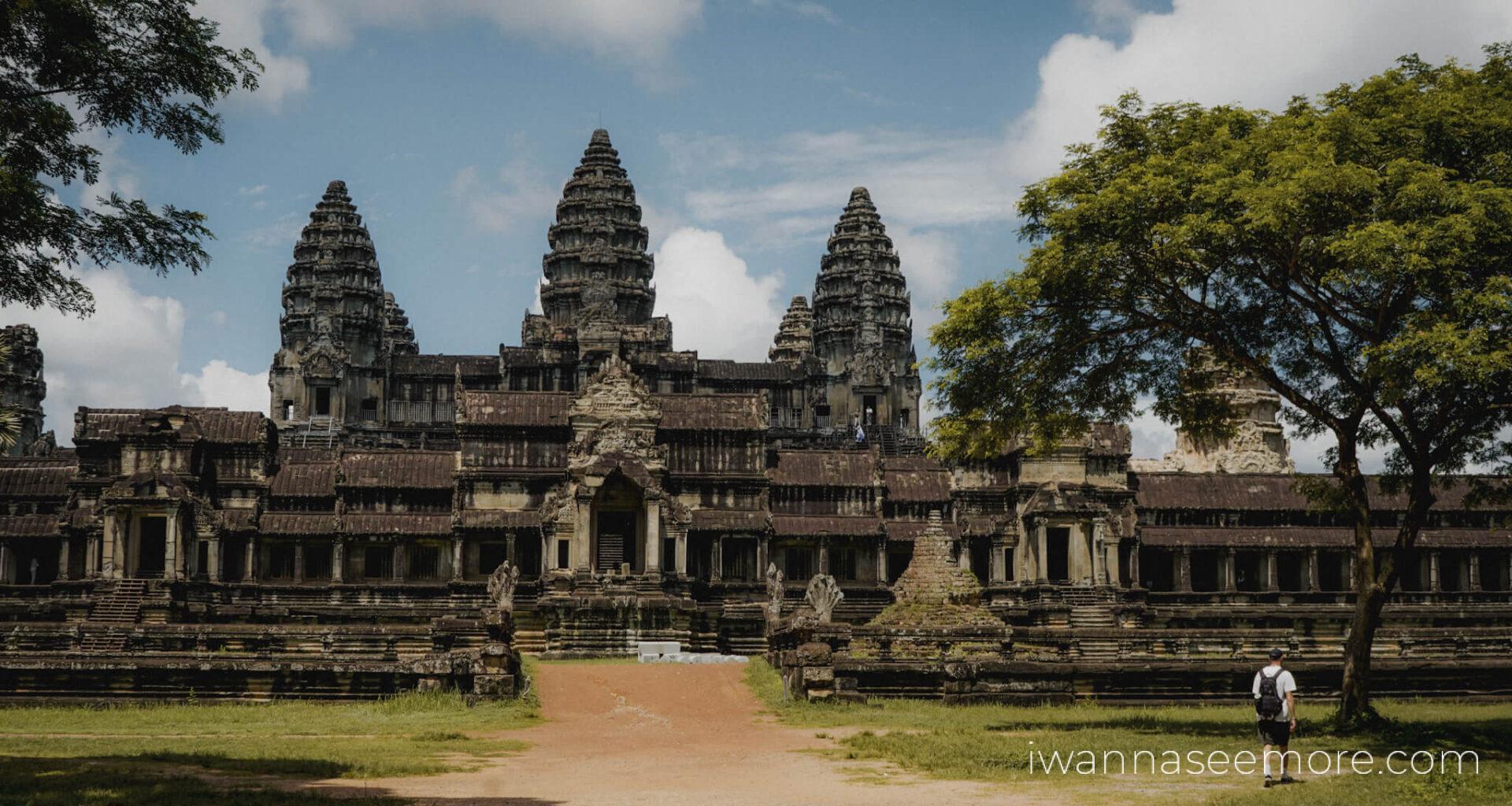
The country’s greatest historical value is the Angkor Wat temple complex, one of the most recognizable UNESCO monuments that attracts tourists from all over the world. Angkor Wat is one of the largest religious monuments in the world. It is known for its jungle temples, including Ta Prohm, where scenes from the movie “Lara Croft: Tomb Raider” movie.
What to do in Siem Reap: main attractions
The Angkor Wat is undoubtedly the main attraction in Siem Reap, offering a stunning sight at sunrise or sunset.
Prices for visiting the Angkor Wat complex in 2024 are as follows (buy a ticket):
- One-day ticket: $37 USD
- Three-day ticket (valid for 10 days): $62 USD
- Seven-day ticket (valid for one month): $72 USD
We recommend taking a three-day ticket to fully enjoy all the temples. If you wish, you can visit only the main temples in one day. In this case, we recommend our own route: we meet the dawn at Angkor Wat temple, immediately after it we head to Ta Prohm, the most beautiful temple in our opinion, to have time to enjoy the silence before the crowds of tourists arrive. Then we visit the temples: Banteay Kdei, Pre Rup temple, Ta Som, Victory Gate, Bayon Temple, Tonle Om Gate and at sunset we go up to Phnom Bakheng.
But besides this iconic temple, there are many other places worth visiting. The city’s neighborhoods are filled with cultural gems and attractions, from elephant sanctuaries to hidden temples in the jungle.
Take part in day trips to the floating villages on Lake Tonle Sap (ticket price $20-25). The floating villages on Tonle Sap arose out of the need to adapt to seasonal changes in the lake’s water level, which increases dramatically during the rainy season. Local residents, mostly fishermen, built houses on the water to stay closer to fisheries resources and avoid flooding. Living on the water allowed them to move with the water level, making them less dependent on the changing seasons. The floating villages on Tonle Sap Lake also became a refuge for Vietnamese fleeing the war. Because the Cambodian authorities did not grant them land permits, Vietnamese refugees were forced to build their homes on the water. This allowed them to survive, as they could continue fishing and living on the lake without needing land on land. *Be prepared to be asked for money everywhere, they even have card terminals for this purpose)
Visit National Park Kulen ($20). The park is known for its river “lingas” – images carved into the river bottom symbolizing the god Shiva. The water that flows through these lingas is considered sacred. One of the main attractions is the Kulen Waterfall, where you can swim and feel the refreshing jungle atmosphere. The park also has a large statue of a reclining Buddha carved into the rock, which attracts pilgrims and tourists.
If you are looking for a different type of adventure, visit Pub Street, known for its lively nightlife. Here you will also find some of the best restaurants in the city, offering a wide variety of local and international cuisine.


Itinerary ideas: how many days to spend
A well-planned itinerary is essential to get the most out of your visit to Siem Reap. Most travelers find that three to five days is the ideal time to explore the temples, sample the local food, and take a few day trips. Start your first day with a sunrise at Angkor Wat and then explore the nearby temples. Spend the next few days sightseeing, visiting floating villages, and experiencing the nightlife. Use our guide to plan your day trips and make sure you don’t miss any of the must-see places.
Unique experiences and entertainment
In addition to visiting temples, Siem Reap offers plenty of activities. Attend a cooking class to learn traditional Cambodian recipes, or try a hot air balloon ride over Angkor Wat for a bird’s eye view of the region. Boat tours on Tonle Sap Lake are a relaxing way to explore floating villages. Visiting the night and old markets is a must for those who want to buy local goods and taste authentic street food.
We recommend visiting the Apsara Theater in Siem Reap. It is a popular place to enjoy traditional Khmer dance, in particular apsara, a dance that dates back to the Angkor era and is closely related to Cambodian mythology and religion. It is one of the most exquisite and symbolic dances in the world, once performed only in the royal court. The dancers are dressed in luxurious traditional costumes reflecting the ancient Khmer culture. Apsara Theater is known for preserving the authenticity of its performances and offering audiences an immersive experience in Khmer history and mythology through music, movement and dramatic elements.
Experience a water blessing ceremony, traditional to Cambodia as well as other parts of Southeast Asia, especially in Buddhist and Hindu cultures. During this ceremony, a monk or an elder in the community sprinkles or pours blessed water on people or sacred objects. The purpose of such a blessing is to provide spiritual purification, protection, and wishes of good luck, health, and prosperity.


Food and restaurants: the best places to eat in Siem Reap
Siem Reap is a foodie’s paradise, offering everything from street food to fine dining. Indian restaurants such as Curry Walla and Dakshin’s are popular with those seeking rich, flavorful dishes. The best restaurants for local Khmer cuisine can be found on Pub Street and in the Old Market area. Siem Reap also has great international restaurants, making it easy to find something for everyone.
Be sure to try traditional Khmer dishes such as amok – grilled fish wrapped in banana leaves, or lok lak – marinated beef with rice. We recommend trying the traditional Num Banh Chok soup, which is served with a huge bowl of greens, which is our favorite. Drinks include tea mushroom (kombucha) and local beer, such as Angkor.
For street food lovers, we recommend visiting the night markets in Siem Reap and trying a local delicacy – fried frog. Be sure to try local fruits: mango, rambutan, dragon fruit, papaya, and especially red bananas.


Transportation: how to get around
Siem Reap has good connections via the international airport, and the city is easy to get around by tuk-tuks and rented motorcycles. Although Uber is not available, local transportation is affordable and convenient. We recommend downloading the Grab app.
Hotels offer tuk-tuk services for a day, the price is $20-25, renting a PCX moped is $17/day. Getting around the city costs an average of $1.5.
Best time to visit and climate
The climate in Siem Reap is tropical, hot and humid, with two distinct seasons: dry (November-April) and rainy (May-October). The dry season is considered the best for traveling, as the weather is more stable and warm, with temperatures ranging from +25°C to +35°C. But at the same time, the influx of tourists increases, which makes exploring the temples not so pleasant. We recommend visiting in October, at the end of the rainy season, as we did. When everything around is still green, there are much fewer tourists, and the presence of rain, on the contrary, only adds to the atmosphere. To get caught in the rain in the most beautiful temple of Ta Prom is priceless!
Practical information: visa, currency and language
Most travelers can obtain a visa upon arrival at Siem Reap International Airport. For Ukrainians, a tourist visa can be obtained online through e-Visa or directly upon arrival. The visa costs $30 and is valid for 30 days.
The most popular mobile operators in Cambodia are Smart Axiata, Cellcard, and Metfone. You can buy a SIM card at airports, specialized stores, or street kiosks. You will need your passport for registration. Travel packages with 10-20 GB of Internet cost from $5 to $10. Coverage is good in cities, but in remote areas the signal may be weaker.
English is widely spoken here, and both Cambodian riels and US dollars can be used for payments.
Having a guide to Angkor Wat and other historical sites can enhance your experience by providing insight into the rich history and culture of the region.
Prices
Prices in Siem Reap are quite affordable. Street food costs about $1-3 per serving, in a middle-class restaurant – $5-10. Accommodation can be found for every taste and budget: hostels cost about $5-10 per night, mid-range hotels – $20-50, and luxury hotels – from $100 per night. Food prices at the market are also affordable, with bread costing $1-1.5 and fruits such as mangoes and bananas costing about $1-2 per kilogram.
Safety
In terms of safety, crime rates in tourist cities are low, but standard safety precautions should be followed. Medical recommendations include hepatitis and malaria vaccinations for those traveling to rural areas.
For those who enjoy aerial photography, it is worth remembering that the use of drones may be restricted, especially near historical sites such as Angkor Wat.
On the world map
In Siem Reap, sunrise is around 6:00 am and sunset is around 18:00.
Travel guide Siem Reap
Top 20 places to visit


