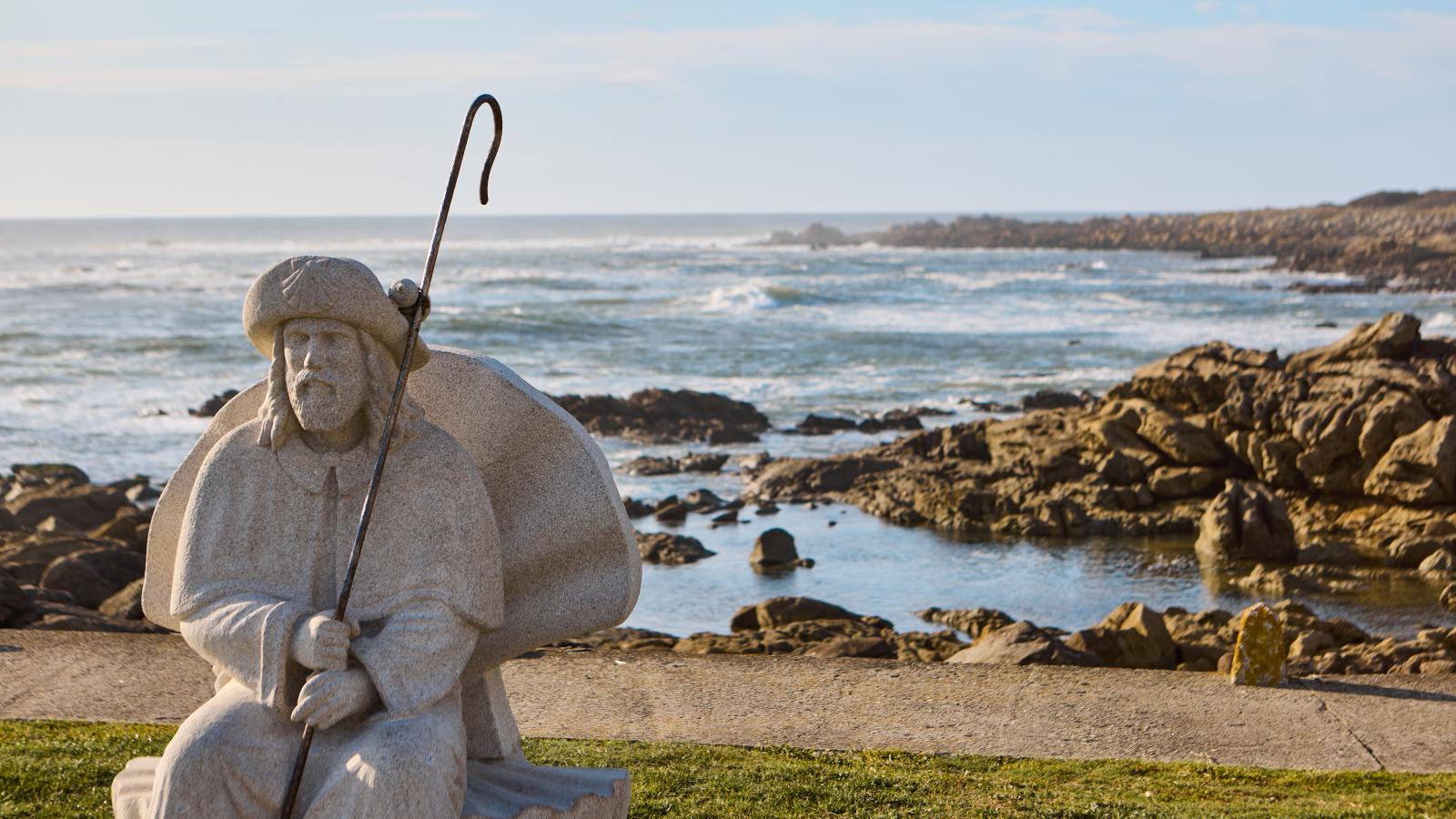
A Brief Guide to the Camino Portuguese Coastal Route
- Route: Porto (Portugal) → Santiago de Compostela (Spain)
- Distance: ~280 km
- Duration: 10 days at a comfortable pace
- Difficulty: Moderate, with mostly flat terrain
- Best season: Early May – early October
- Highlight: Walking along the Atlantic coast for most of the route, with a small boat crossing over the Minho River
- What you’ll need: A pilgrim passport (credencial), comfortable walking shoes, and only the essentials.
Why Camino
I first learned about the Camino at the beginning of the war. From that moment on, the idea never really left me. But I wasn’t ready to go then, and I regretted that decision for a long time.
A few years passed. Even this time, I wasn’t planning to set off. It happened spontaneously, as if the Camino had called me itself. This time, I didn’t say no.
I chose the Camino de Santiago not because I was looking for answers. I went in search of silence. Not to lie on a beach. Not to switch off my phone. But to become still inside while my body kept moving. It turned out to be the simplest way to think: when your legs are busy with the road, your mind finally becomes quiet.
Day 1: The Beginning
Everything began at Porto Cathedral. This is where you receive your Credencial — the pilgrim’s passport. A small booklet that you fill with stamps along the way. The first stamp is placed at the cathedral. At that moment, it feels like a simple formality. But by the time you reach Santiago, that little booklet becomes the most valuable thing in your backpack.
The first day turned out to be the longest — more than 30 kilometers. More than anything, I wanted to leave the city behind. I found the first Camino sign, walked down to the Douro River, and turned north. That was where it truly began: wooden boardwalks along the Atlantic, the wind, and an empty horizon. With every kilometer, there were fewer people, until very quickly only two of us remained — the ocean and me.
I had no plan. I decided to book accommodation as I walked, depending on how far I could make it each day. Looking back, I think that’s one of the central ideas of the Camino. Not to control everything in advance, but to trust the road.
The first albergue was completely full. It was a busy period on the Camino, with pilgrims everywhere, and I had no desire to keep walking. So I found a small place nearby on Airbnb. As the journey went on, Airbnb became my most reliable companion when it came to finding a place to stay.
Day 2: Mindelo → Apúlia, 20 kilometers
I set off at seven in the morning. The ocean, the cool air, the sound of birds. These are the mornings that make the Camino worth walking. May is probably the best month to do it: it’s not too hot yet, there aren’t many people, and nature has fully come back to life after winter.
A few hours later, I reached Vila do Conde and stopped at Humble Anchor Coffee Roasters, a small specialty coffee shop that roasts its own beans and offers a stamp for your credencial. Without exaggeration, it was the best coffee I had along the entire coast. Nearby is Igreja Matriz de São João Baptista, where I received another stamp. I passed several more churches later that day, but not all of them had one. Strangely enough, that stayed on my mind for the rest of the day.
For dinner, I stopped at Além do Mar com Sabores in Apúlia. A simple restaurant by the ocean where locals come to eat. I ordered arroz de tamboril — monkfish rice. One of those dishes that feels right to try exactly where it belongs.
Then, at the very end of the day, something happened that was probably the real reason for walking the Camino. At Igreja Matriz de Apúlia, I found another stamp, and beside it was a sheet of paper with a short meditation. Just an ordinary piece of paper with a few lines of text. I took a deep breath, and for the first time I realized this wasn’t just a hiking route. It was something more.
I ended the day at Albergue Santiago da Costa, a simple family-run albergue by the ocean.
Day 3: Apúlia → Viana do Castelo, 29 kilometers
I set off early and once again followed the Atlantic coast, passing through Esposende. The day began with coffee and pastries at Pastry Rio Doce, a family-run bakery where the locals gather every morning. Along the way, I came across more and more churches, and almost all of them now had a stamp for my credencial. After the previous day, that somehow made me smile.
The highlight, however, was Igreja Matriz de São Miguel Arcanjo das Marinhas. There, I was welcomed by a monk. He stamped my credencial, we exchanged a few words, and before I left, he handed me a small note with a quote from the Pope.
What impressed me most wasn’t the note. It was him.
All day long, the monk welcomed pilgrims, stamped their passports, spoke with each of them for a few moments, and sent them back on their journey. During all ten days of the Camino, I never experienced anything like it again.
For the past few days, I had been thinking a lot about authenticity. About people who genuinely believe in what they do. That encounter came at exactly the moment I needed it. It reminded me that even a few minutes of sincere attention given to a stranger can stay with you far longer than dozens of kilometers on the road.
For dinner, I stopped at Bota d’Água, an excellent local restaurant known for its fresh fish. And if you’re looking for a special culinary stop, Viana do Castelo is also home to the Michelin-recommended Tasquinha da Linda, located right by the harbor.
I spent the night at the municipal São João dos Caminhos Albergue. If you decide to stay there, I’d recommend booking a private room.
Day 4: Viana do Castelo → Moledo, 25 kilometers
This time, I started later than usual. And honestly, I regretted it almost immediately.
The plan was simple: to climb up to the Sanctuary of Santa Luzia at sunrise — a hilltop basilica with one of the most beautiful panoramic views over the Atlantic. Inside, you’ll find stunning stained-glass windows and one of the largest rose windows in Europe. A small tip: the Camino stamp isn’t available inside the basilica itself, but at the nearby albergue.
The main reason for my stop, though, was Manuel Natário, the legendary pastry shop that’s been open since 1919. I wanted to try their famous Bolas de Berlim. The bakery opens at 9 a.m., but I discovered that the fresh pastries don’t arrive until 11. Waiting two hours didn’t make sense, so I decided to leave it for another time.
Strangely enough, that tiny disappointment stayed with me for most of the day. For the first time on the Camino, it started raining. My hip began to hurt. And my mood wasn’t at its best.
Along the way, I stumbled across Cafe de Cabanas, a cozy little café serving excellent coffee and homemade pastries. Sometimes, a short stop is all it takes for the day to change its course.
Because of the delay that morning, I realized I wouldn’t make it to the town where the boats take pilgrims across to Spain. So I decided to spend the night in Moledo. The plan was to have dinner at O Coberto, a small restaurant specializing in modern Galician cuisine, where the menu changes every day.
When I walked in, I found out they were closing early. The owner explained that they were hosting a special dinner that evening — an event they organize only a few times a year — and every seat had been reserved long ago.
My first thought was, “Seriously?..”
Then she smiled and said, “If you really want to join us, I’ll see if I can find you a seat.”
Of course I did.
It turned out to be one of the best decisions of my entire Camino.
Apart from me, everyone at the table was local. We tasted cider and local wines, shared dinner, talked, and simply enjoyed the evening. It was my last night in Portugal, and I couldn’t have imagined a better way to spend it.
That evening reminded me of something simple.
Sometimes, all you have to do is ask.
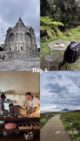
Day 5: Moledo → Oia, 22 kilometers
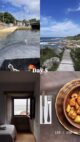
I set off early and stopped at Pastelaria Caminhense in Caminha on the way to the harbor. Fresh coffee, homemade pastries — the perfect way to start the day before the river crossing.
From Caminha, I boarded a small boat across the Minho River. Ten minutes on the water, and I was already in Spain. I moved my watch one hour ahead, took a few steps along the shore, and suddenly felt as if I had entered another world. A different country. A different language. A different rhythm. And, to be honest, for the first time in my life, I felt like a smuggler. It was such a strange feeling — getting on a small boat and finding yourself in another country just a few minutes later.
A Guarda welcomed me with two churches right on the Camino — Iglesia de San Benito and Igrexa de Santa María — where I collected my first Spanish stamps. It also welcomed me with rain.
Before starting the Camino, I had deliberately decided not to bring a rain jacket. My thinking was simple: if it rained heavily, I just wouldn’t walk. But when the first drops fell that day, it felt completely different. I didn’t look for shelter. I didn’t rush. I simply kept walking. And I was perfectly happy.
That night, I stayed at Casa Picota Oia, a small house overlooking the Atlantic Ocean. After changing into dry clothes, I went for dinner at A Casa da Henriqueta. The food was excellent, and the view was beautiful, although the place felt a bit more geared toward tourists. I had also hoped to visit the Royal Monastery of Santa María, but unfortunately it was closed for restoration.
Day 6: Oia → Saiáns, 26 kilometers
The morning began with the Atlantic. Cliffs, wind, and hardly another person in sight. It rained all day. I walked in silence, thinking neither about the kilometers nor the time. On days like this, you think about only one thing — making it to the evening.
In Baiona, I stopped at Igrexa de Santa María, a 13th-century Romanesque church located right on the Camino. Getting a stamp for my credencial was easy. I also had a list of restaurants I wanted to visit, but I quickly realized it was Monday. And in Galicia, that means many of the best local restaurants are closed. Once again, the Camino reminded me not to cling too tightly to the plan.
For dinner, I ended up at the nearby R Curbeira Restaurante. I found it by chance, and those unexpected discoveries are often the ones you remember the most. It’s a small family-run restaurant where almost everyone is local. Fresh fish, homemade wine served in a clay pitcher, and the owner personally comes to every table to explain what they’ve cooked that day. It was here that I tried Pimientos de Padrón and Pulpo a la Gallega — Galician octopus with paprika — for the very first time.
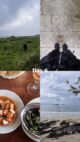
I spent the night at Camiño de Mide in Saiáns. I had found a room there by chance on Airbnb while walking, and it turned out to be my favorite place to stay during the entire Camino. After several days on the road, a hot bath felt like pure luxury. That evening, I watched one of the most beautiful sunsets of the entire journey from my room’s window.
That day reminded me of something once again.
The best places are almost never the ones you find on a list.
You find them along the way.
Day 7: Saiáns → Arcade, 29 kilometers
The morning began with two churches — Igrexa de San Miguel de Bouzas on the outskirts of Vigo and Santiago de Vigo Church in the city center. Both are right on the Camino. Both offer stamps for your credencial.
In Vigo, I made another important stop — Club del Café. They roast their own beans, serve an excellent flat white, and, in my opinion, make the best coffee on the entire Spanish section of the Camino. If you love coffee as much as I do, don’t walk past it.
I spent the night at Albergue Lameiriñas in Arcade. A modern, clean albergue with a kitchen and laundry facilities — one of the best places I stayed during the entire journey.
That evening, it was time for another Galician classic at Restaurante Avenida Arcade. Arcade is often called the oyster capital of Galicia, and now I completely understand why. A dozen fresh oysters, a glass of local Albariño, and the perfect way to end another day on the Camino.
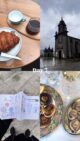
Day 8: Arcade → Caldas de Reis, 33 kilometers
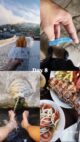
I set off early. Ahead was A Canicouva — the longest and most demanding climb on the Galician section of the Camino. It’s not especially steep, but it’s rocky. This is where you quickly realize that rushing gets you nowhere. You simply have to find your own rhythm and keep walking.
In Pontevedra, I made my usual coffee stop at Club del Café. It’s the same coffee roastery I had visited in Vigo, but this is where they actually roast the beans, and somehow the coffee was even better. In the city center, I visited the Virxe Peregrina Chapel, shaped like a scallop shell — one of the symbols of the Camino — as well as the Basilica of Santa María a Maior.
Originally, I had planned to spend the night in the small village of Briallos. But once I realized there wasn’t really anywhere to have a proper dinner there, I decided to walk another four kilometers to Caldas de Reis instead. It turned out to be the right decision.
I stayed at Albergue A Queimada, a simple but very clean albergue in the heart of town. Before dinner, I stopped by Fonte Termal das Burgas, a free thermal spring right in the middle of the town. After walking 33 kilometers, soaking my feet in hot water under the open sky felt incredible.
For dinner, I went to O Muiño, a legendary local restaurant by the river. I ordered chuletillas de cordero — lamb chops grilled over oak charcoal — together with a glass of local Albariño. Before I left, the owner gave me a loaf of homemade bread. It became my breakfast the next morning.
The eighth day was special for another reason.
For the first time, I had a strange feeling.
Santiago was no longer far away. And instead of feeling excited about reaching the finish, I kept catching myself thinking that I didn’t want the journey to end.
Day 9: Caldas de Reis → Padrón, 28 kilometers
The closer I got to Santiago, the more pilgrims I began to see. The routes merged, and the crowds grew larger. With them, the atmosphere started to change. The road that had been quiet for the past nine days gradually began to feel more like a tourist trail. There were crowds, souvenir shops, and noise. For the first time, I realized that the most valuable part of the Camino was already behind me.
Along the way, I stopped at several small churches — Igrexa de Santa Mariña de Carracedo and Igrexa de San Miguel de Valga, both located directly on the Camino. And of course, I couldn’t miss Igrexa de Santiago Apóstol de Padrón. Inside, near the altar, you’ll find O Pedrón — the stone where, according to legend, the boat carrying the body of Saint James was moored after arriving in Galicia. The town itself takes its name from that very stone.
For dinner, I had planned to visit Restaurante A Casa Dos Martínez, one of the region’s most renowned family-run restaurants, famous for traditional Galician cuisine. I knew they opened at 7:30 p.m., so I arrived at 7:40.
It was already too late. Every table was taken.
I offered to wait until one became available. The owner simply smiled and explained that they don’t work that way. Every evening, they fill all the tables, cook only for the guests who are already seated, and at 9 p.m. they simply close the doors.
Another unfinished chapter.
So dinner that evening turned out to be much simpler — a classic Tarta de Santiago, the traditional almond cake marked with the Cross of Saint James. And honestly, for the second-to-last evening of the Camino, it felt like more than enough.
That night, I stayed at O Albergue da Meiga. I had only one goal — to get to bed as early as possible.
Tomorrow, Santiago awaited.
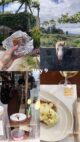
Day 10: The Finish.
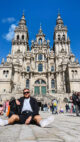
I set off before sunrise. I wanted to reach Santiago in time for the Pilgrim’s Mass at noon.
The final kilometers felt different. Not because of the fatigue, but because I knew the journey was about to end. Just before entering the city, I stopped at Igrexa da Escravitude. A few more kilometers, and Santiago was finally within reach.
Then, suddenly, I was standing in Praza do Obradoiro. I took off my backpack, sat down on the cobblestones, and spent a few minutes silently looking at the cathedral. That was when the biggest surprise of the entire Camino came. For some reason, I had imagined this moment very differently. I thought the finish would feel extraordinary, that there would be a deep sense of completion. Instead, I found myself in an ordinary tourist square — hundreds of people, guided tours, long lines, souvenir shops, and cafés. For a brief moment, one thought crossed my mind: “Did I really walk almost 300 kilometers for this?”
The answer came almost immediately. Of course not. I hadn’t come here for the square. Or even for the cathedral. Everything that truly mattered had already happened along the way.
Before the Mass, you should stop by the Pilgrim’s Reception Office to receive your Compostela — the official certificate confirming that you’ve completed the Camino. Only then are you counted among that day’s pilgrims. During the Mass, no names are read aloud. Instead, the priest simply announces how many pilgrims have arrived that day and where they began their journey.
“From Porto…” And I realized that I was one of them.
During the Mass, I suddenly noticed that my left foot had swollen badly. It hadn’t happened once during the previous ten days. Why it happened at that exact moment, I still don’t know.
After the Mass, I stayed in the square for a long time. I remembered. Reflected. Watched new pilgrims arrive, one after another. Each carrying a different story.
I celebrated with lunch at A Noiesa Casa de Comidas, one of those family-run restaurants where Galician food is prepared without pretension, but with genuine care.
Then I boarded a bus back to Porto. Just three hours. The very same journey that had taken me ten days on foot. And that was when I finally understood something. For me, the Camino had never been about reaching Santiago. It had always been about everything that happened along the way.
What the Road Really Gives You
People often ask me why you would walk a journey that can be driven in just a few hours.
The answer is very simple. The road gives you back the pace that modern life has taken away. For ten days, you have only one task — to walk. No notifications. No deadlines. No dozens of decisions waiting to be made. There is morning, there is the road, and there is evening. And suddenly, that is enough.
I think this is what meditation really is. Not sitting with your eyes closed, but moving. Your legs do their work, while your thoughts slowly settle, like sediment in water once you stop stirring it. By the time you reach Santiago, you are no longer the same person. Not because you’ve found the answers to every question, but because your mind has finally learned how to be quiet.
The Camino isn’t about religion. Although for some people, it certainly can be. For me, it became a reminder that sometimes the shortest way back to yourself is the longest road on foot.
You may have noticed that I hardly described all the places I passed along the way. That was intentional. I don’t believe in the perfect itinerary. Everyone has to walk their own Camino. Yes, there are places I would return to without hesitation. Restaurants I genuinely recommend. Small discoveries I wanted to share. But the most valuable part of this journey is something you will never find in someone else’s guidebook.
So I hope you find your own places, your own people, and your own stories.
Because for me, the Camino was never about Santiago. It was about mornings by the Atlantic. About the monk who welcomed strangers every single day. About the rain that eventually stopped bothering me. About random restaurants that turned out to be unforgettable. About the kind of exhaustion that clears your mind. About people you’ll never meet again. And about the silence I had finally learned to hear.
The journey ended. But its rhythm stayed with me. And I have a feeling it always will.
The world is far bigger than it seems.
And this is only the beginning.
I WANNA SEE MORE. FOREVER.